Even experienced divers may feel slightly tense when diving in a new environment for the first time. This section is written for divers who are visiting Jeju for the first time, to explain how diving is structured and what to expect.
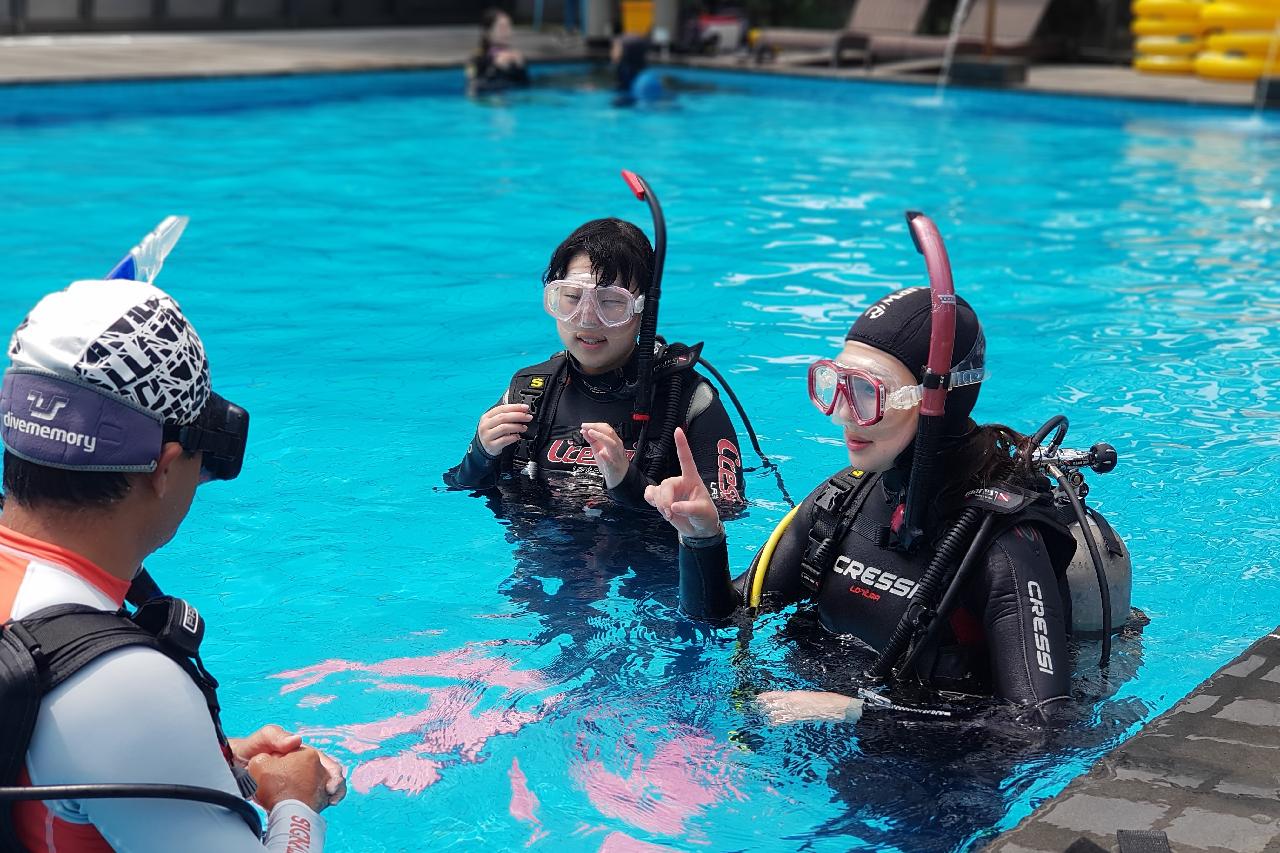
In this section, the word “first time” has two different meanings. One refers to diving for the first time ever, and the other refers to diving in Jeju for the first time. In many cases, both may apply at the same time. This guide focuses on divers who already have scuba diving experience, but are new to diving in Jeju. If scuba diving itself is new to you, information about introductory dives is explained separately in [7] Guide for Try Divers. It is also assumed that readers of this section are already familiar with [3] The Basic Structure of What to Expect When Diving in Jeju.
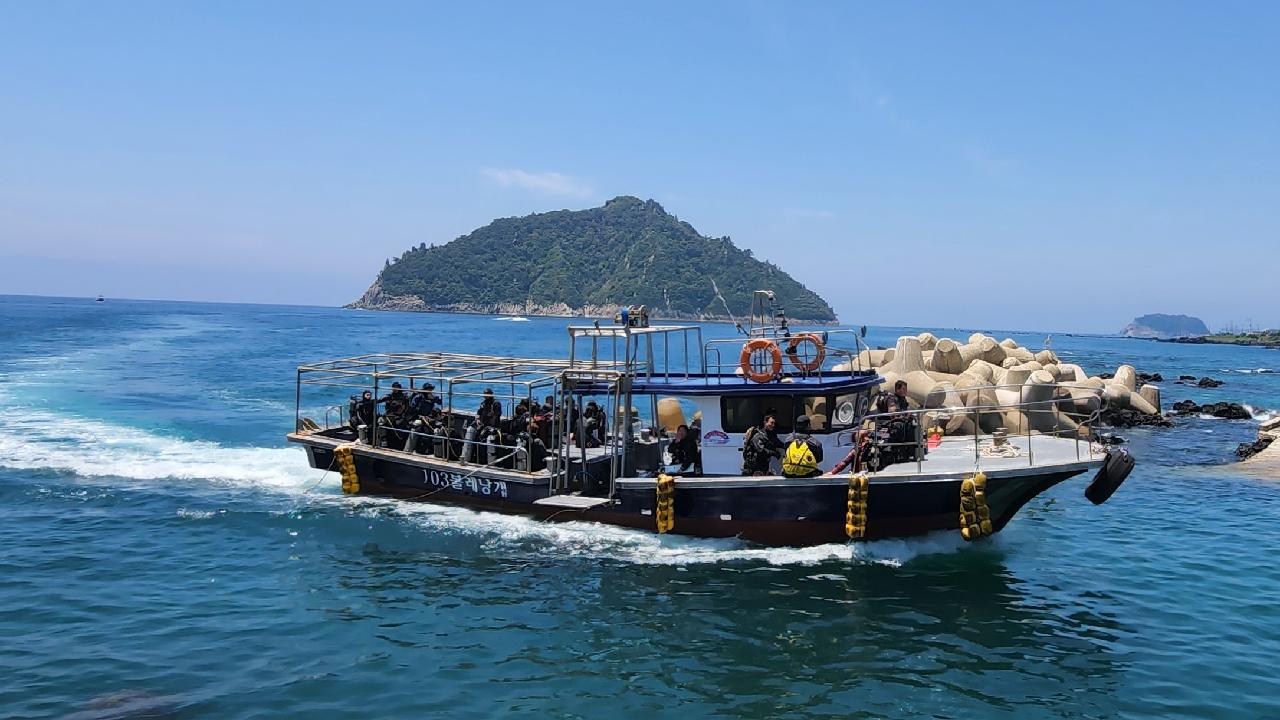
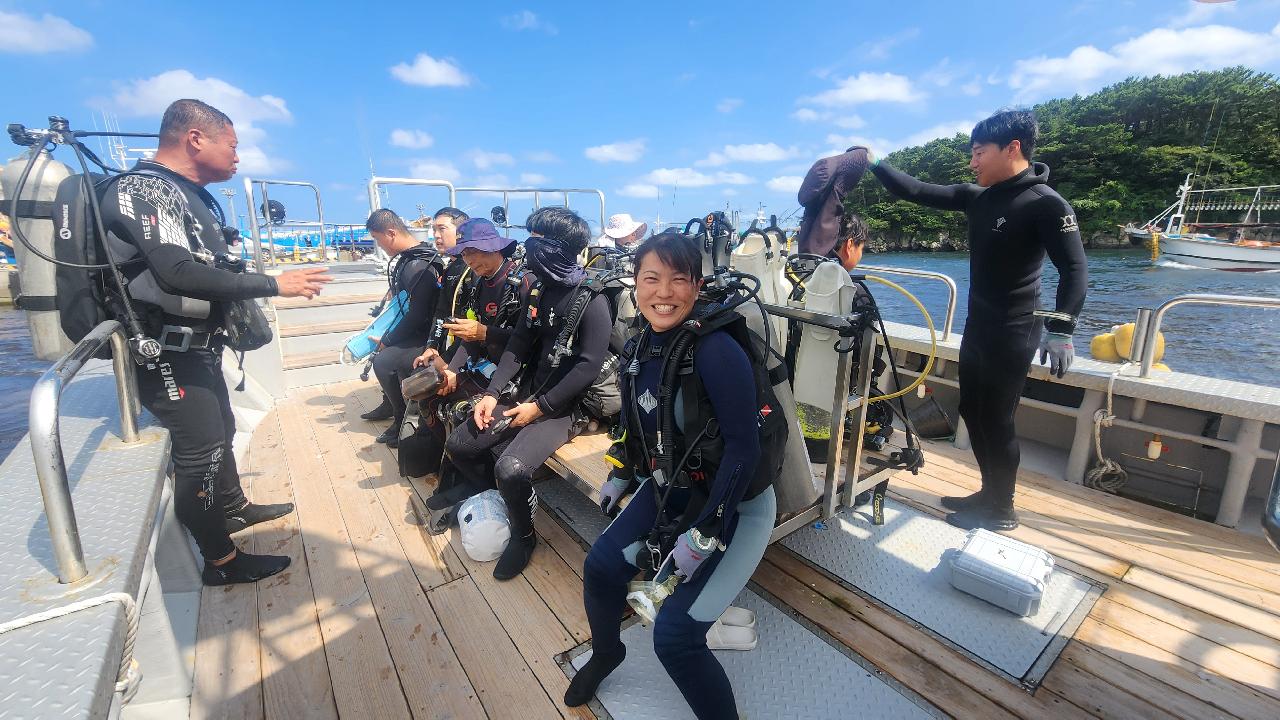
Jeju is a single large island, but most dive sites are located around small offshore islets just off its southern coast. For this reason, most diving in Jeju is conducted as boat diving rather than shore diving. Because travel time from the harbor to dive sites is usually short (around 10–15 minutes), divers typically depart fully geared up. The boat is primarily a means of transportation to the dive site, so items not needed for diving—such as smartphones or sunglasses—are usually left behind. While some exceptions exist, this is the general structure. As a result, surface intervals are usually spent at the harbor rather than on the boat.
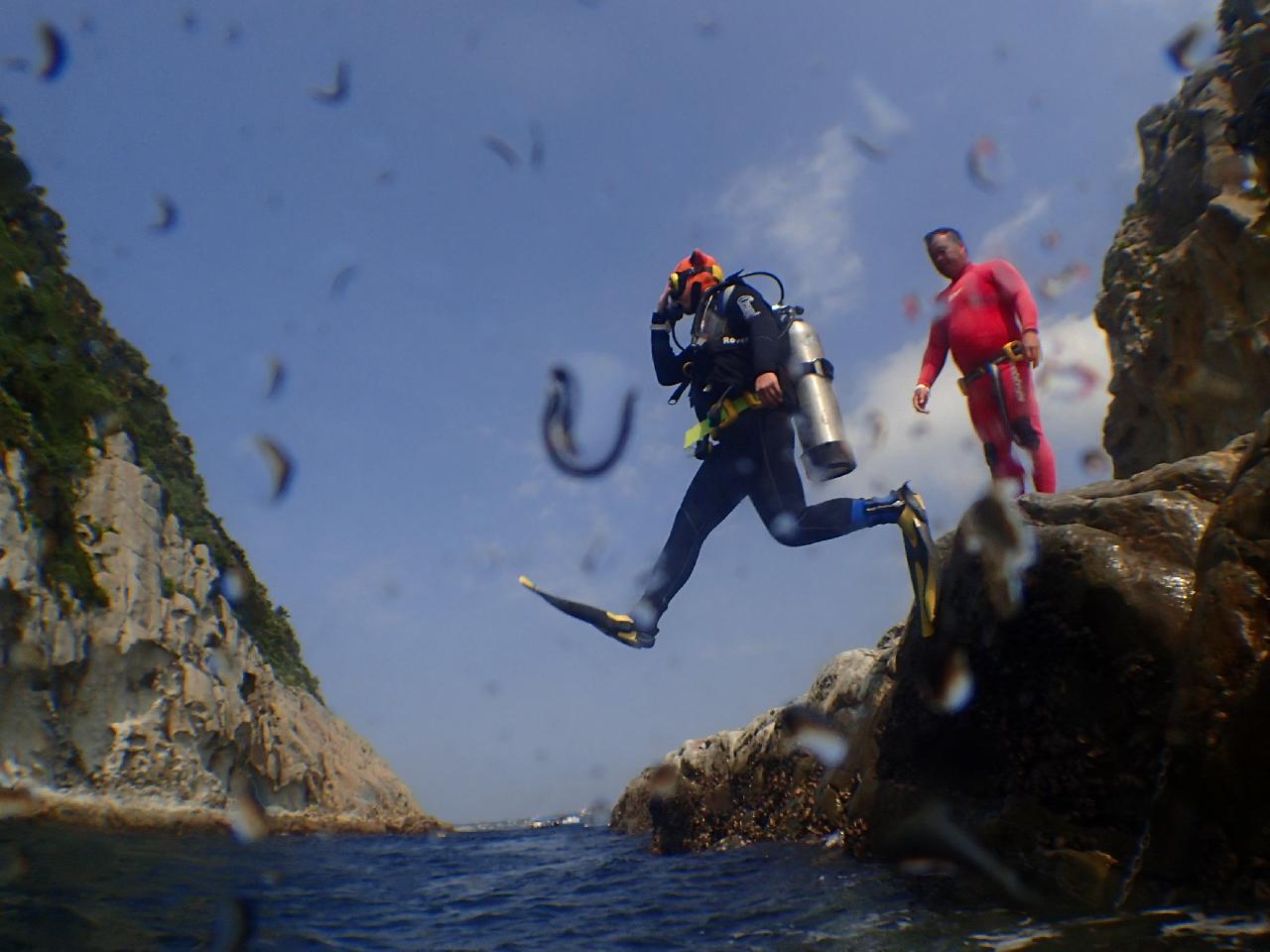
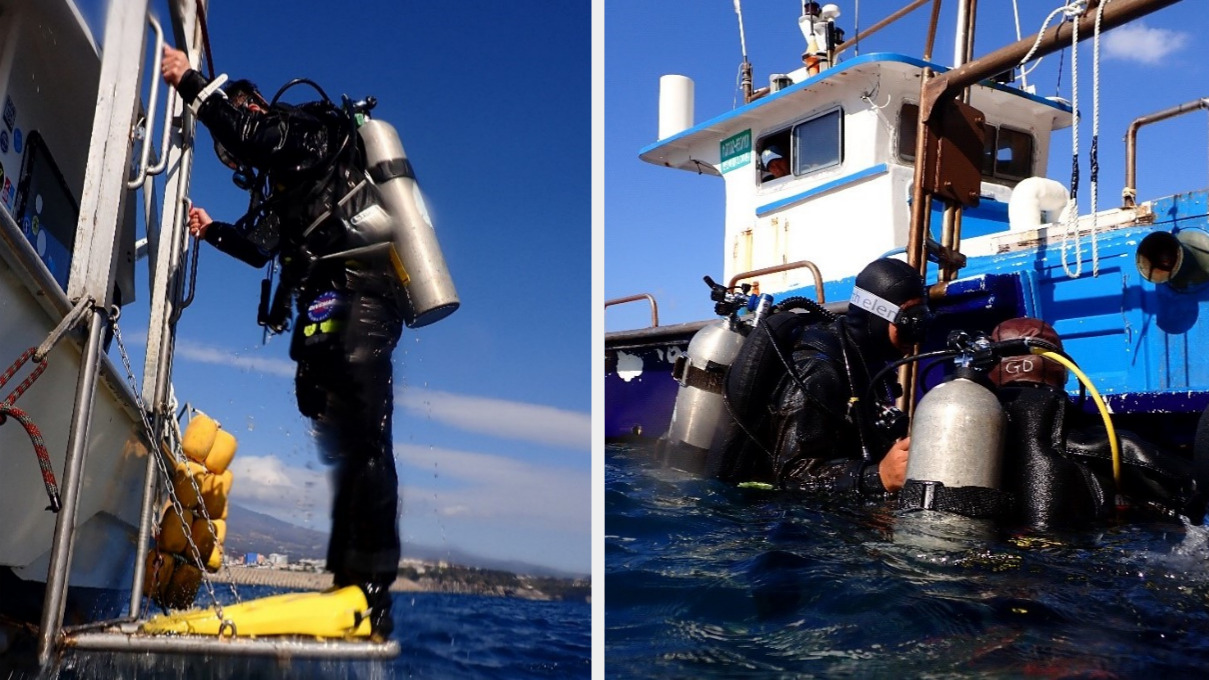
Jeju is generally a region affected by ocean currents. Current strength is not constant, but it can be more noticeable in certain areas, such as Munseom, and during specific tidal phases. Daily dive plans and site choices are adjusted based on these conditions. Because of this environment, strap-type fins are more commonly used than full-foot fins in Jeju. Most dive boats are equipped with lifts, making entry and exit easier. The standard entry method is a giant stride entry. Boats usually do not stay anchored at a single site during the dive. Instead, divers are dropped at different points and picked up after the dive. Following your guide, understanding ascent procedures (such as SMB use), and knowing how to wait on the surface can make the dive more comfortable.
In Jeju, available dive sites may change depending on tides, time of day, and the group composition on that day. Even if you have a specific site in mind, it may not be accessible if conditions are not suitable.
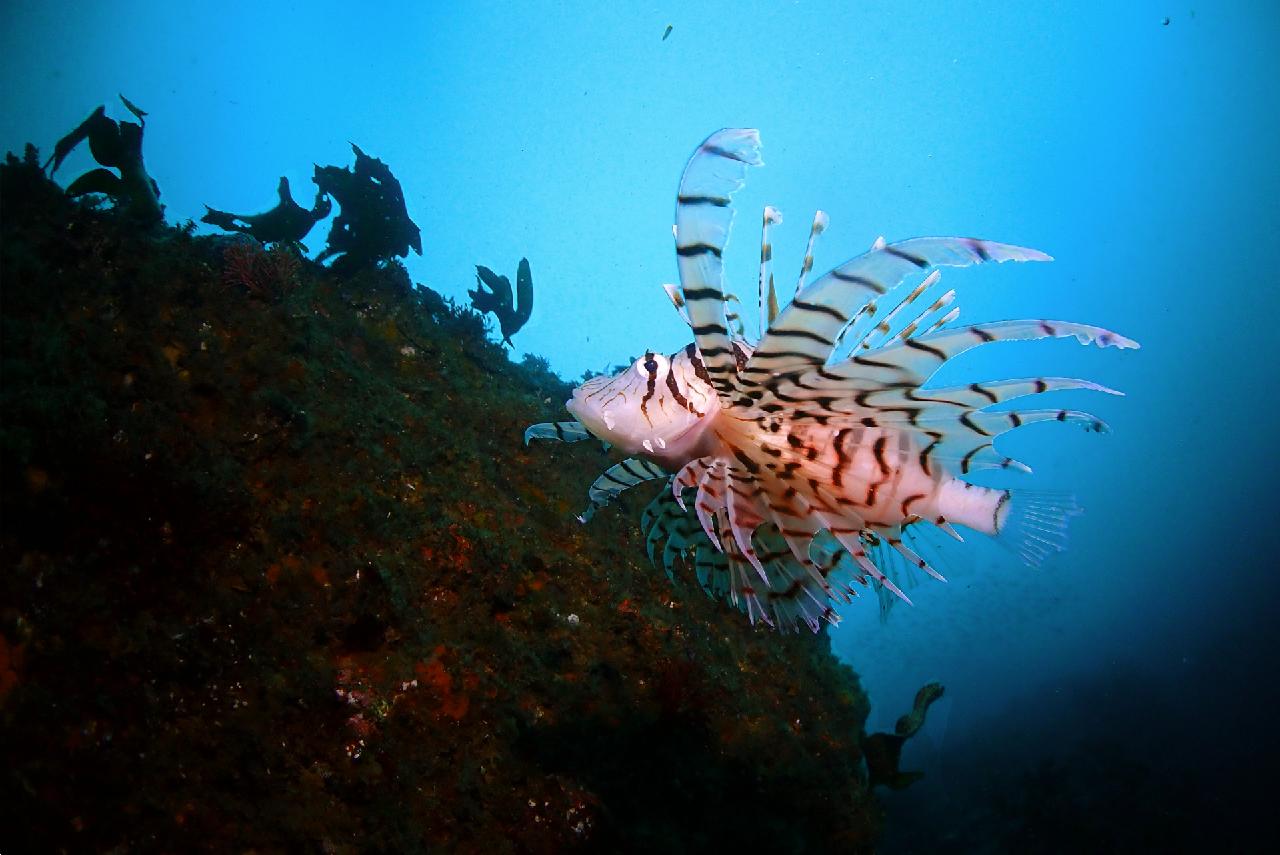
In Jeju, it is common for multiple dive centers to share harbor-based dive boats, while operating independently from one another. During busy seasons, it is important to make sure your equipment does not get mixed with gear from other centers. Keeping to boat schedules and meeting times is especially important. These points are always explained during the pre-dive orientation.
1️⃣ Welcome to Scuba Diving in Jeju ${[%post|70981%]} 2️⃣ What Jeju Scuba Diving is Really Like ${[%post|70982%]} 3️⃣ What to Expect When Scuba Diving in Jeju ${[%post|70983%]} 4️⃣ First-Time Scuba Diving in Jeju ${[%post|70984%]} 5️⃣ Experienced Scuba Divers in Jeju ${[%post|70985%]} 6️⃣ Is Jeju Scuba Diving Suitable for Beginners? ${[%post|70986%]} 7️⃣ I’ve never been Scuba Diving before ${[%post|70987%]} 8️⃣ Group Diving ${[%post|70988%]}
${[%embed|post|70037%]}